…or something like that.
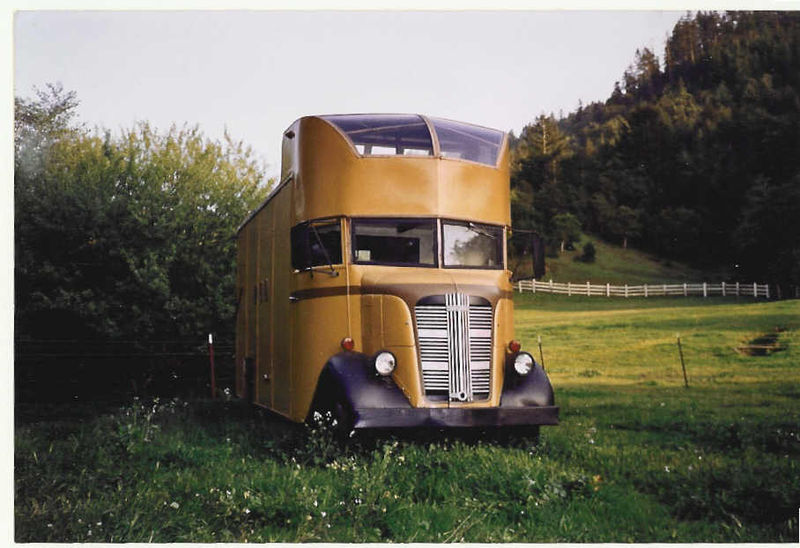
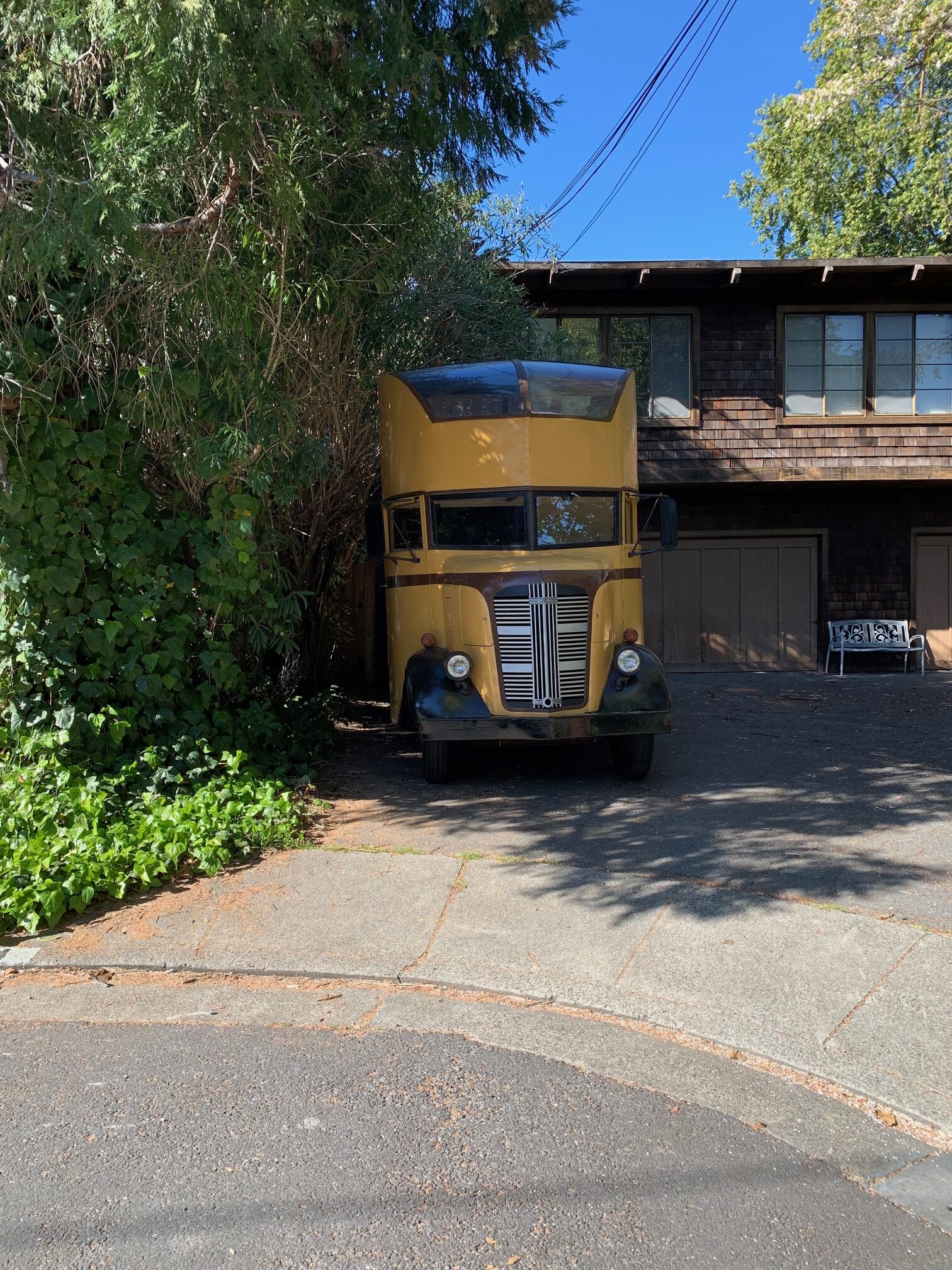
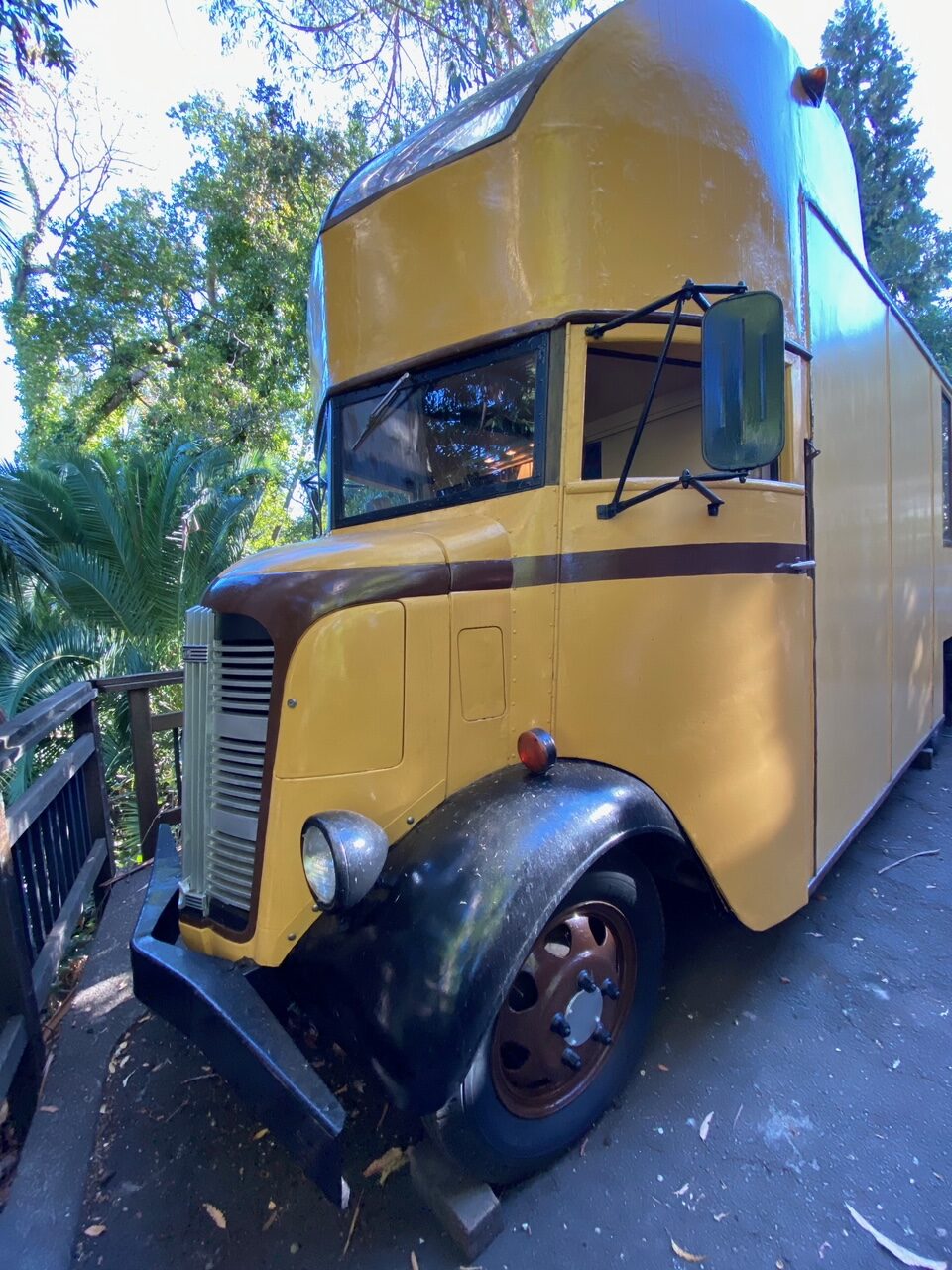
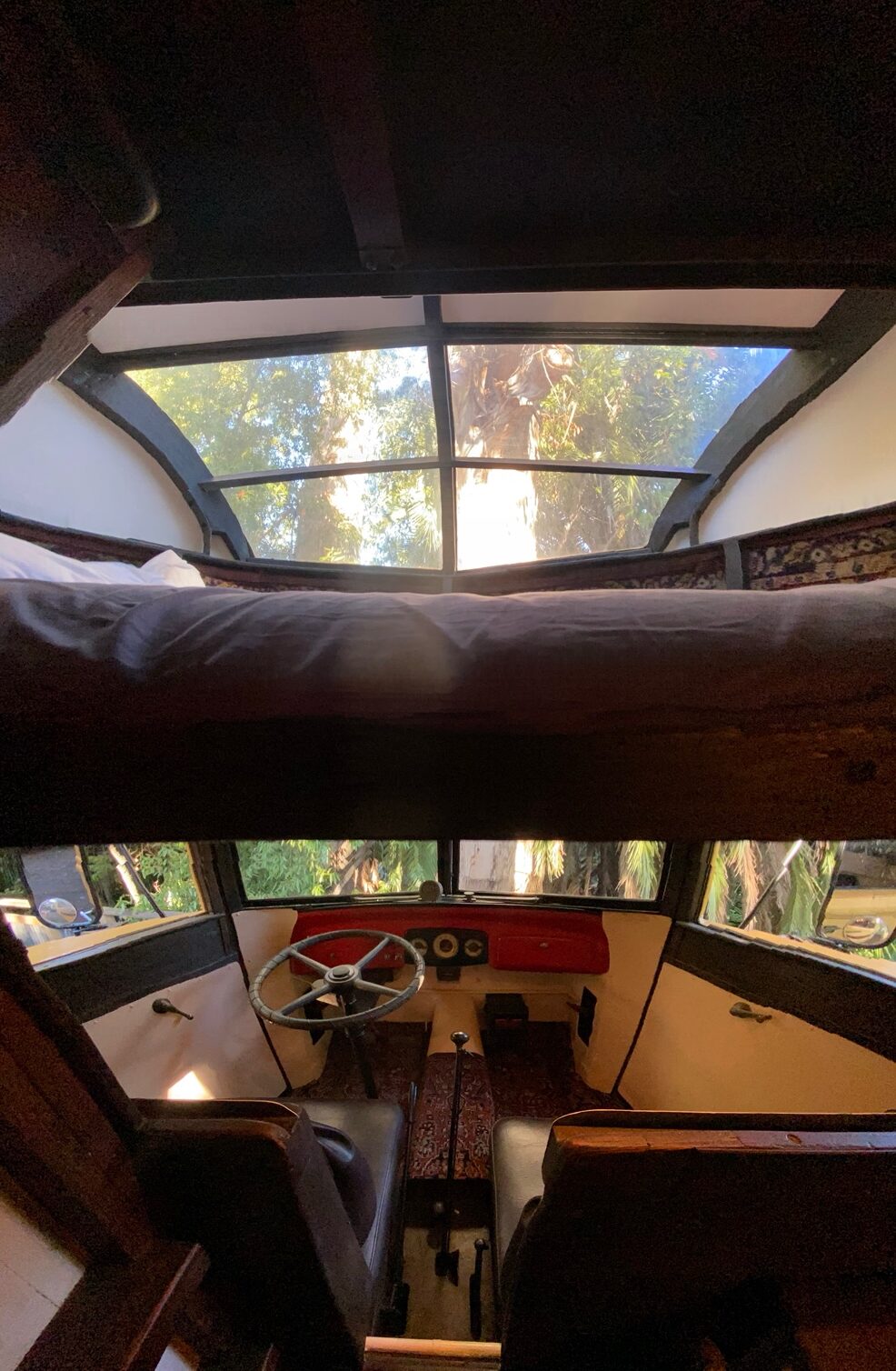
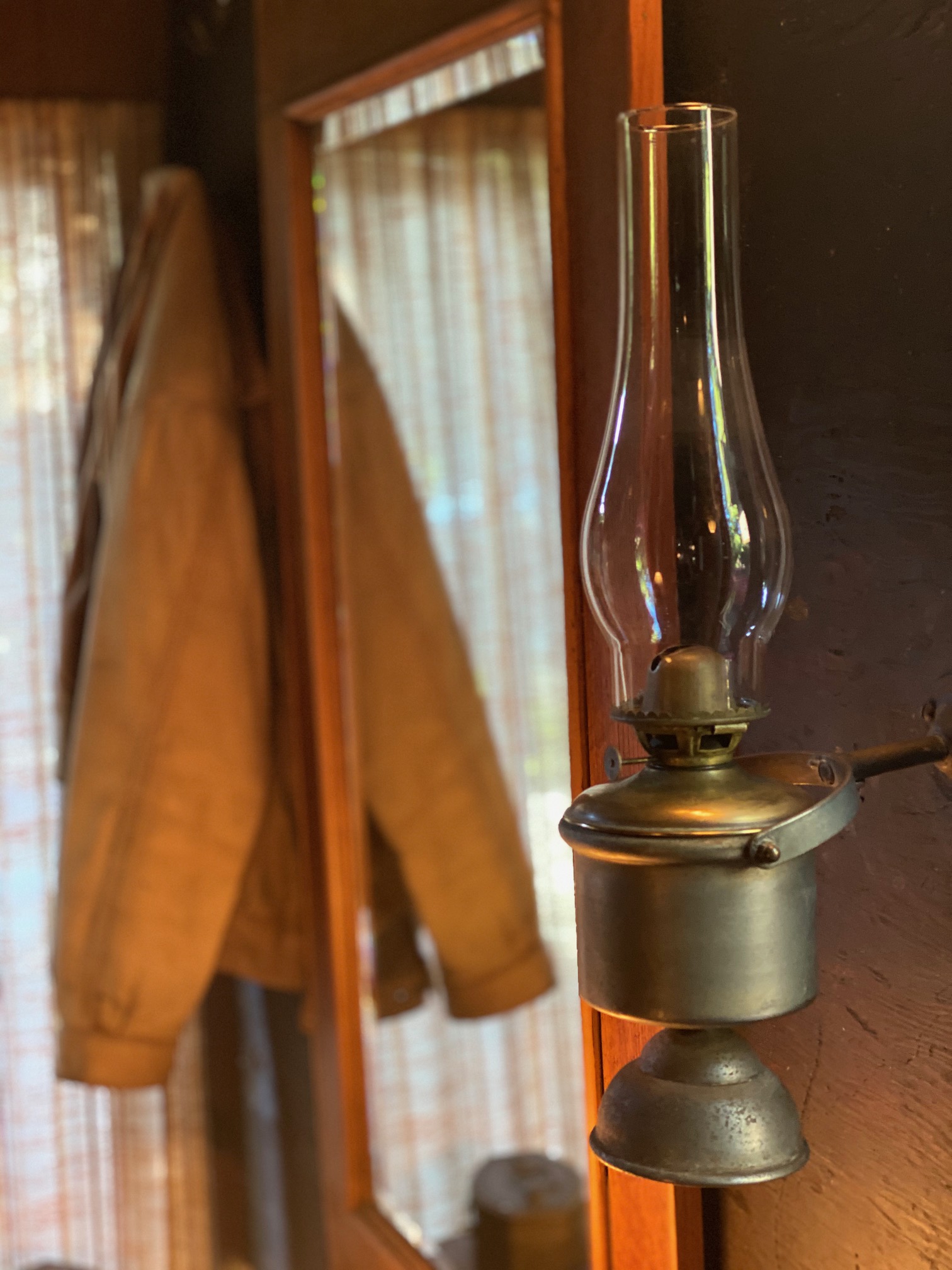
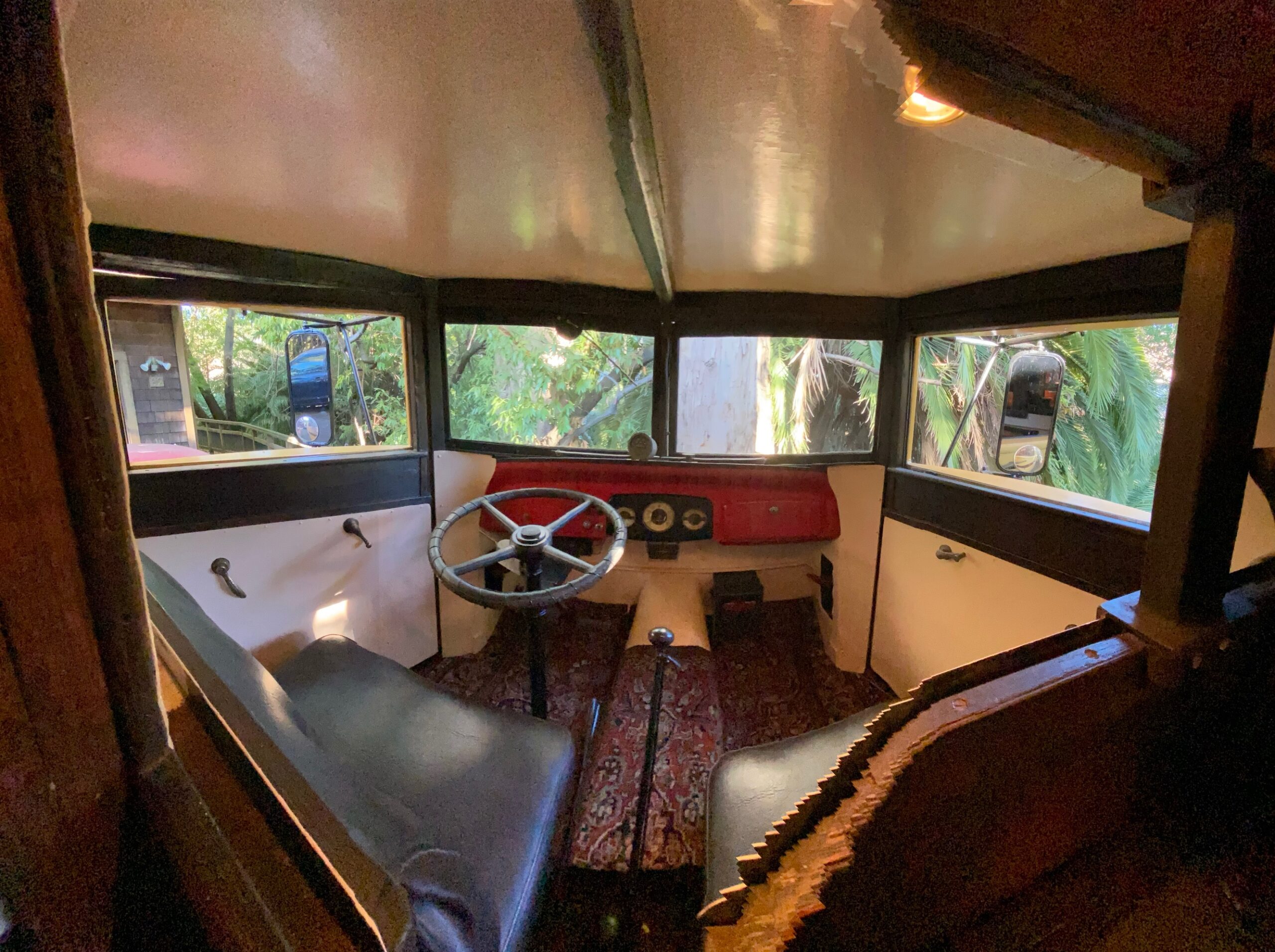
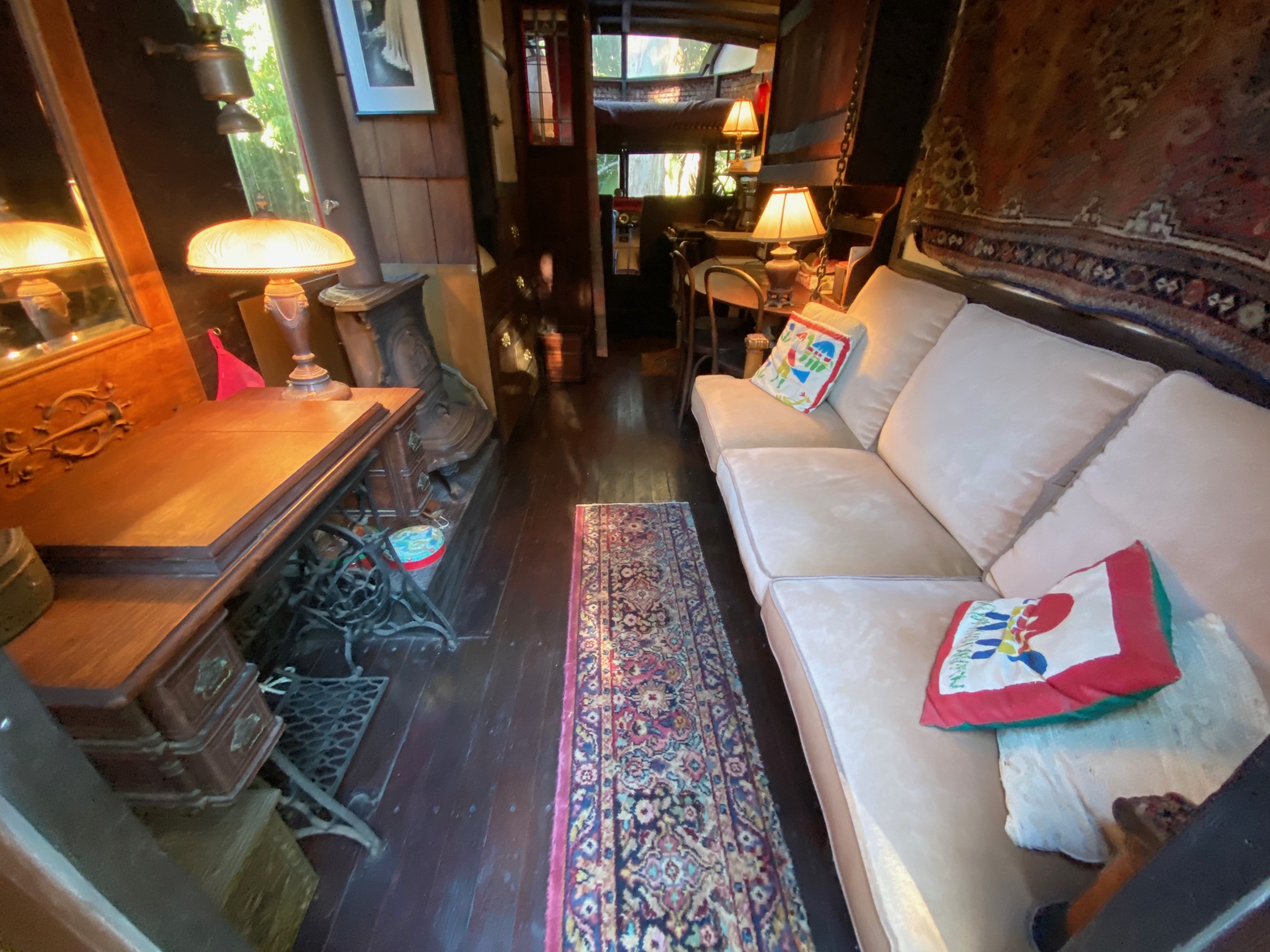
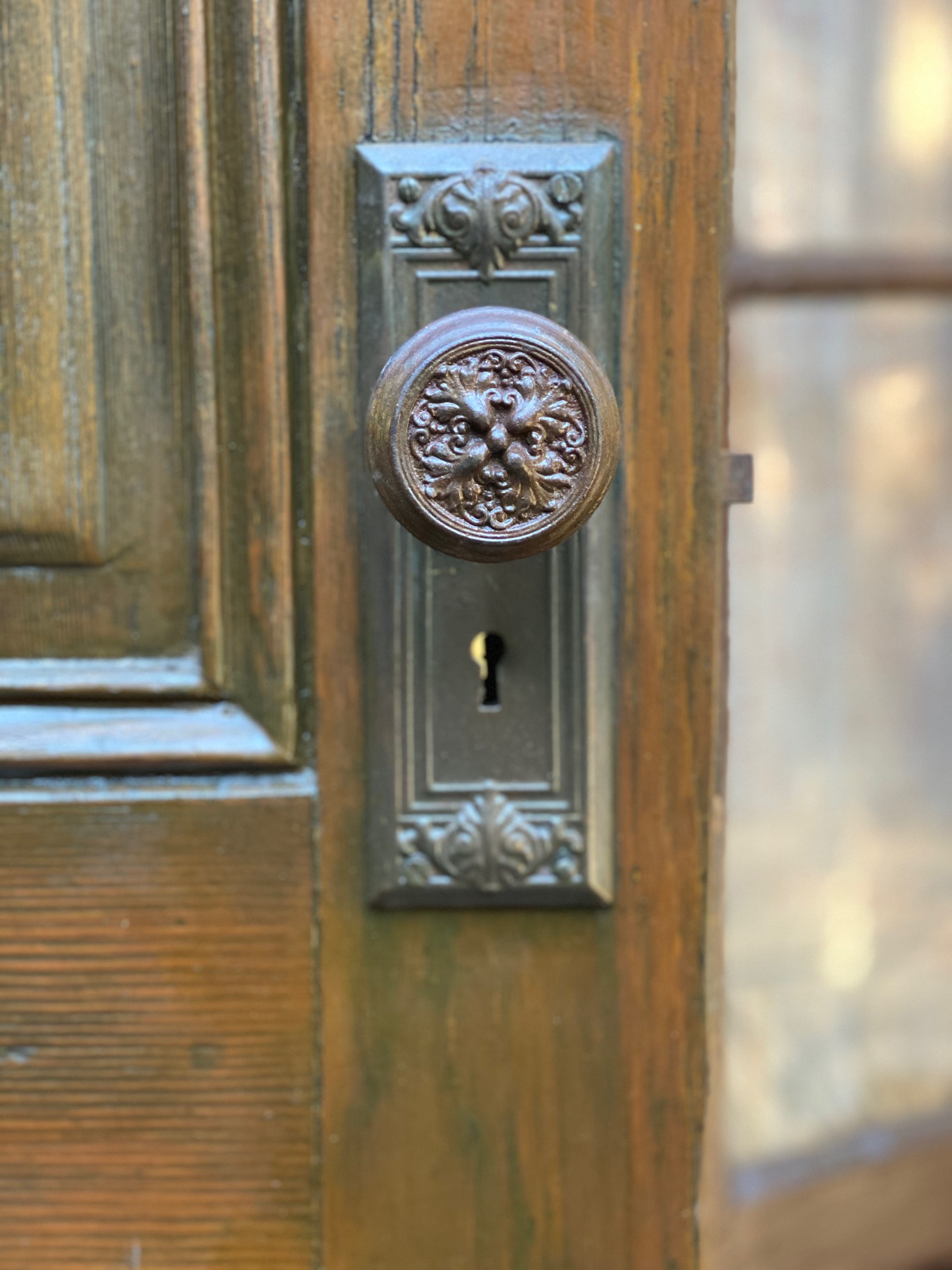
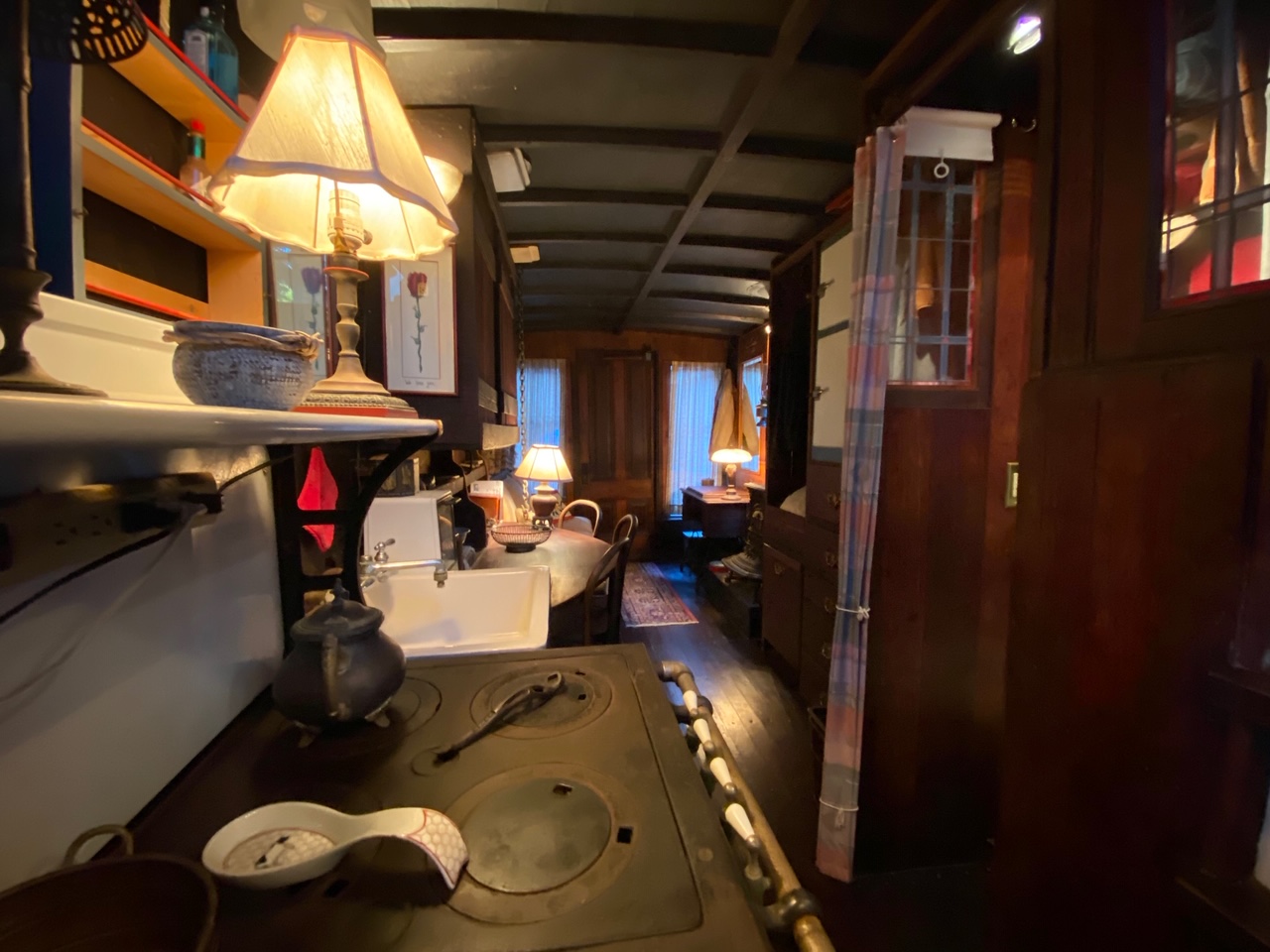
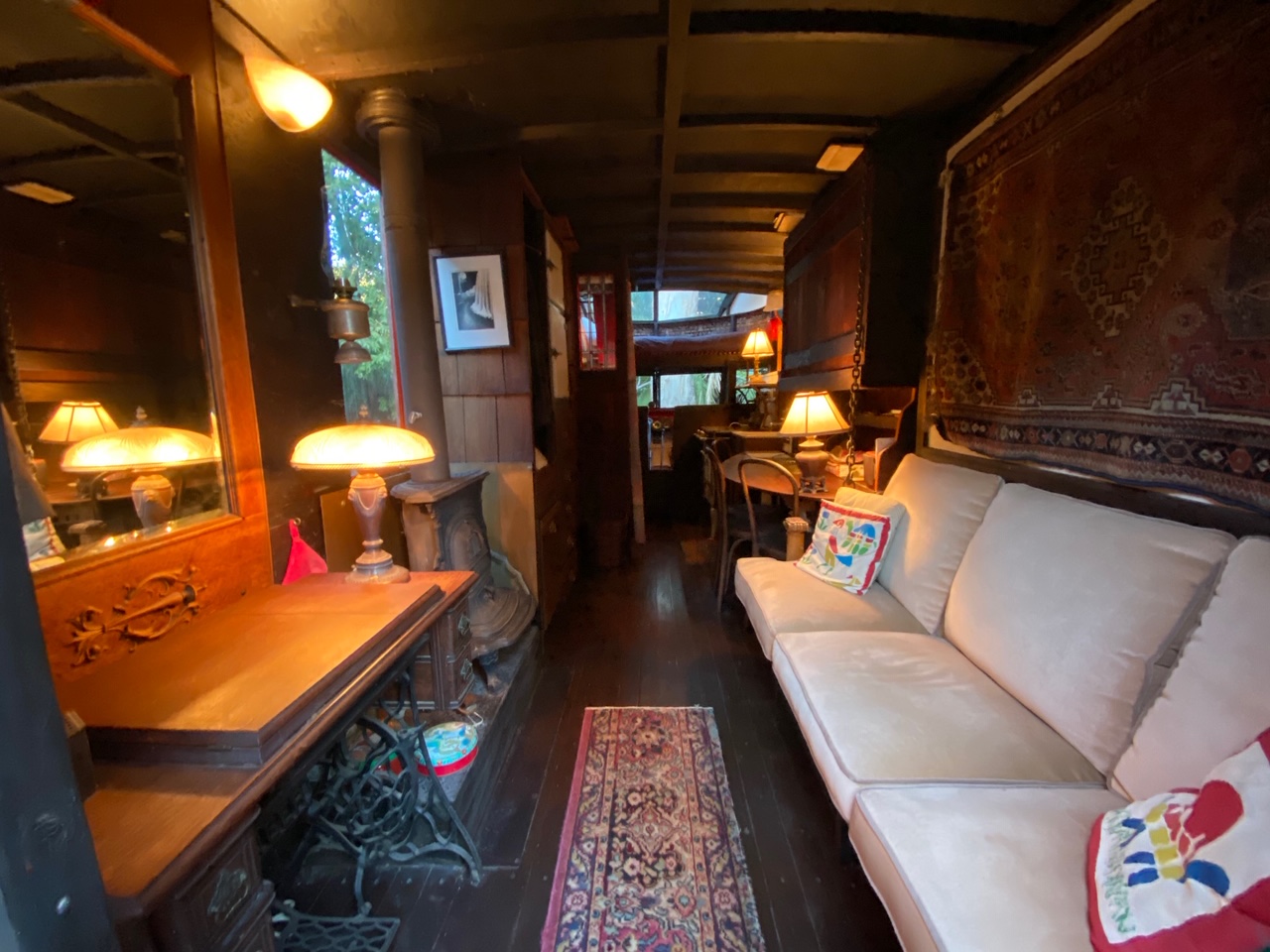
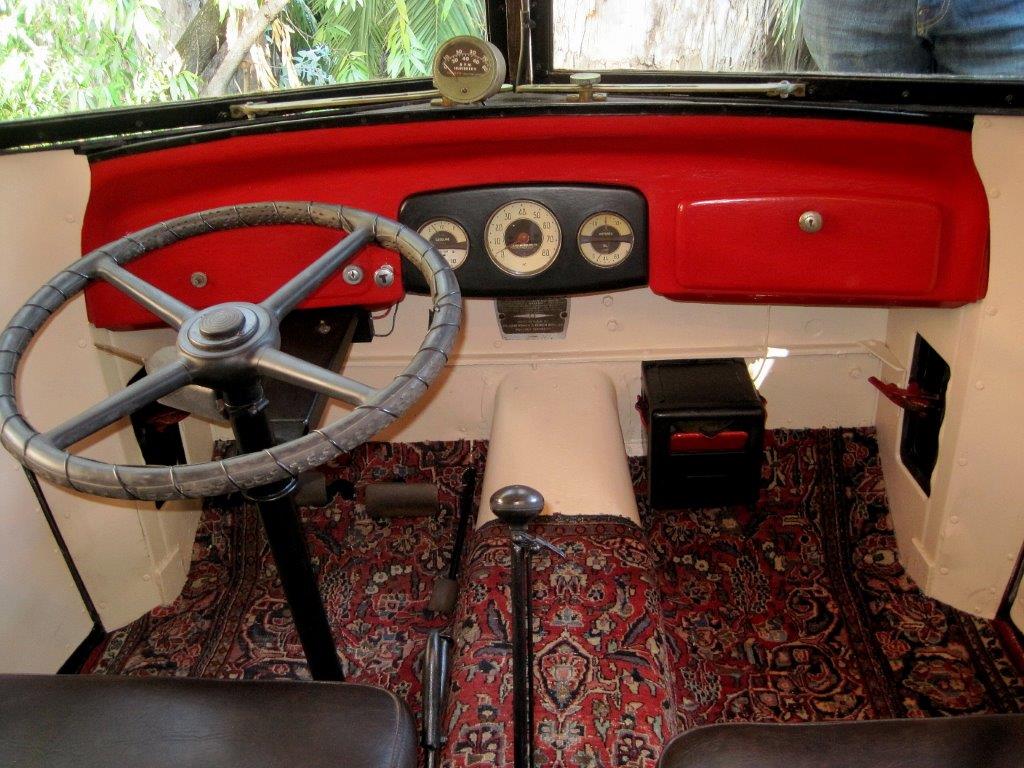
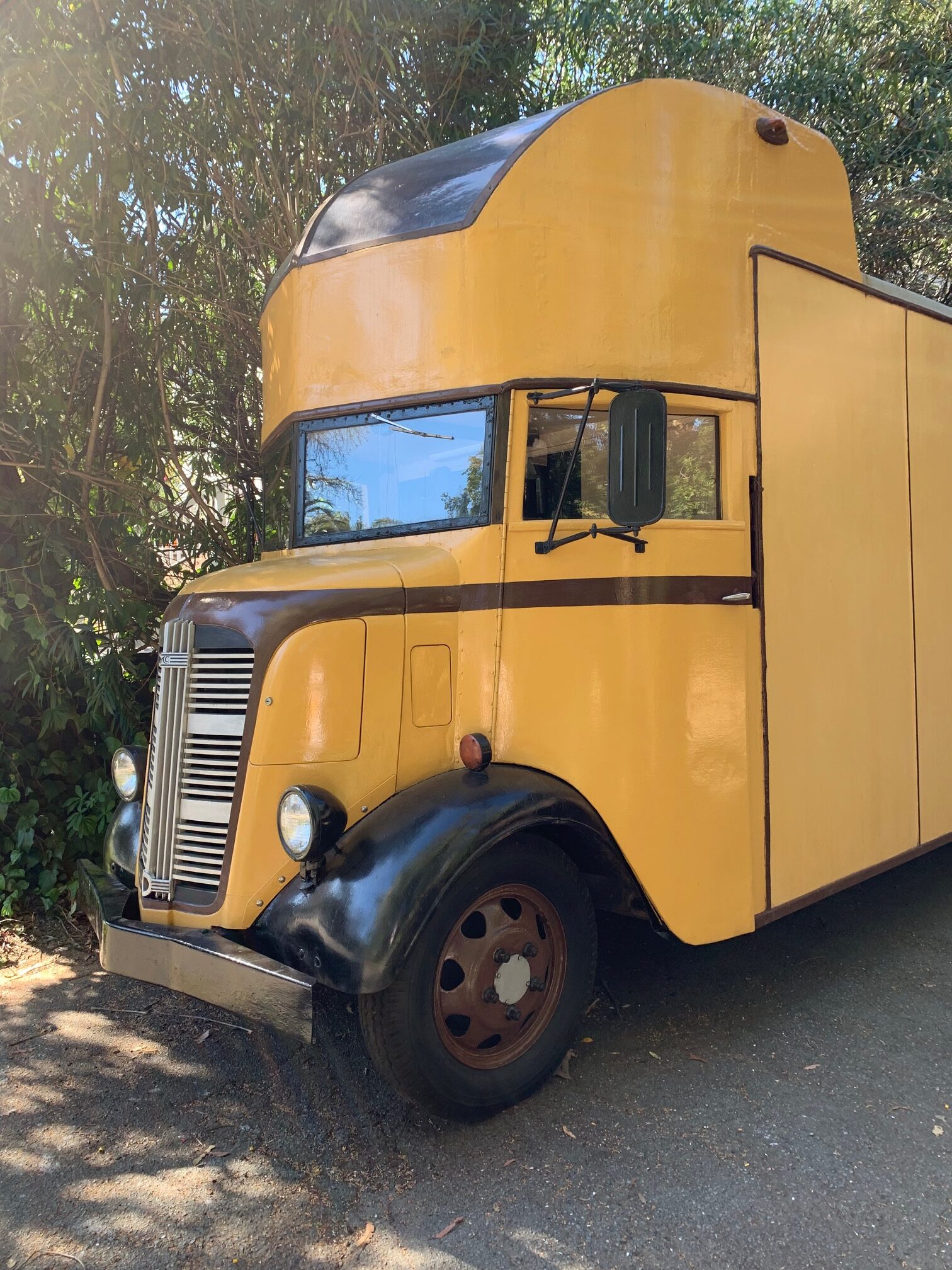
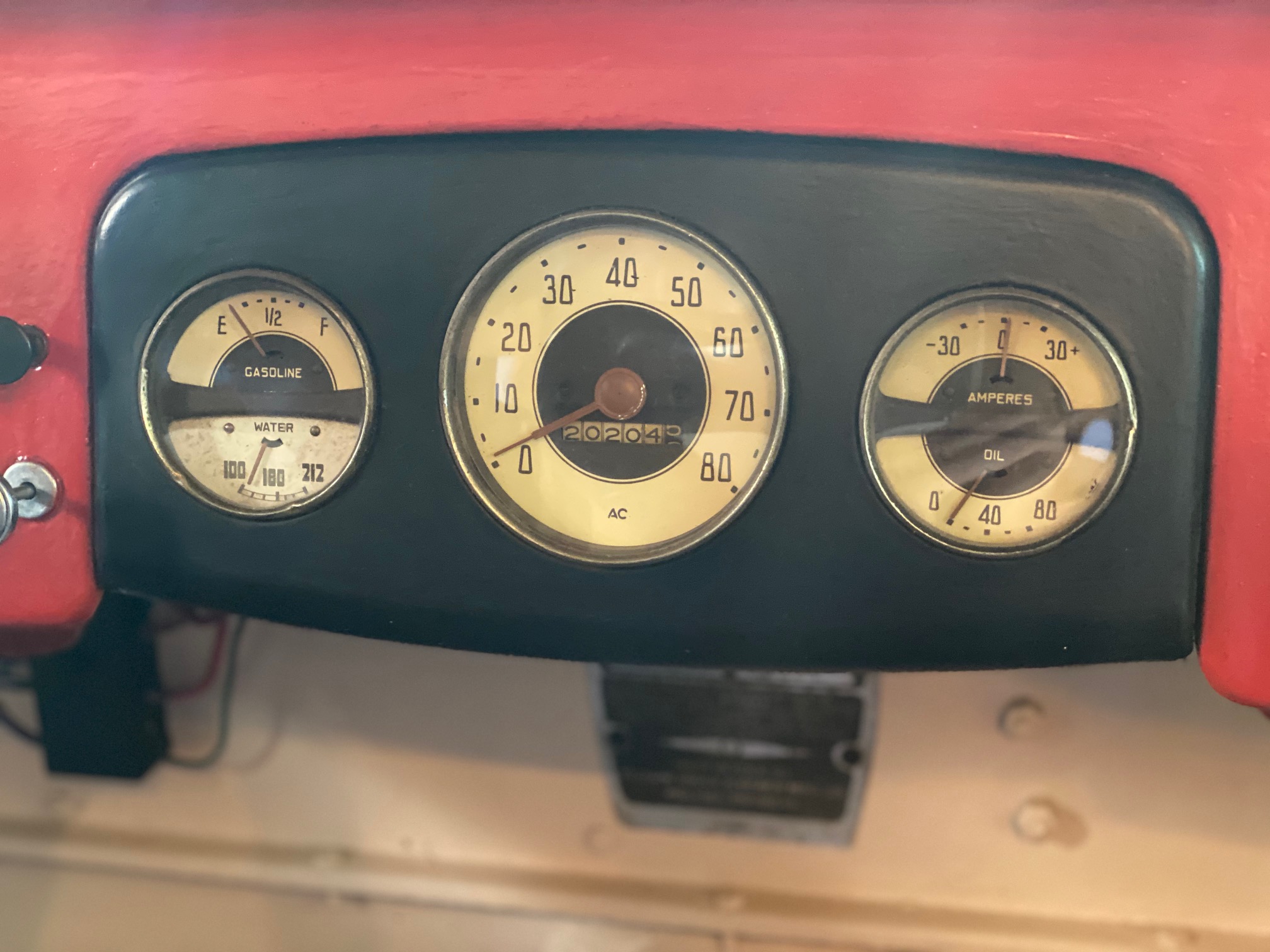
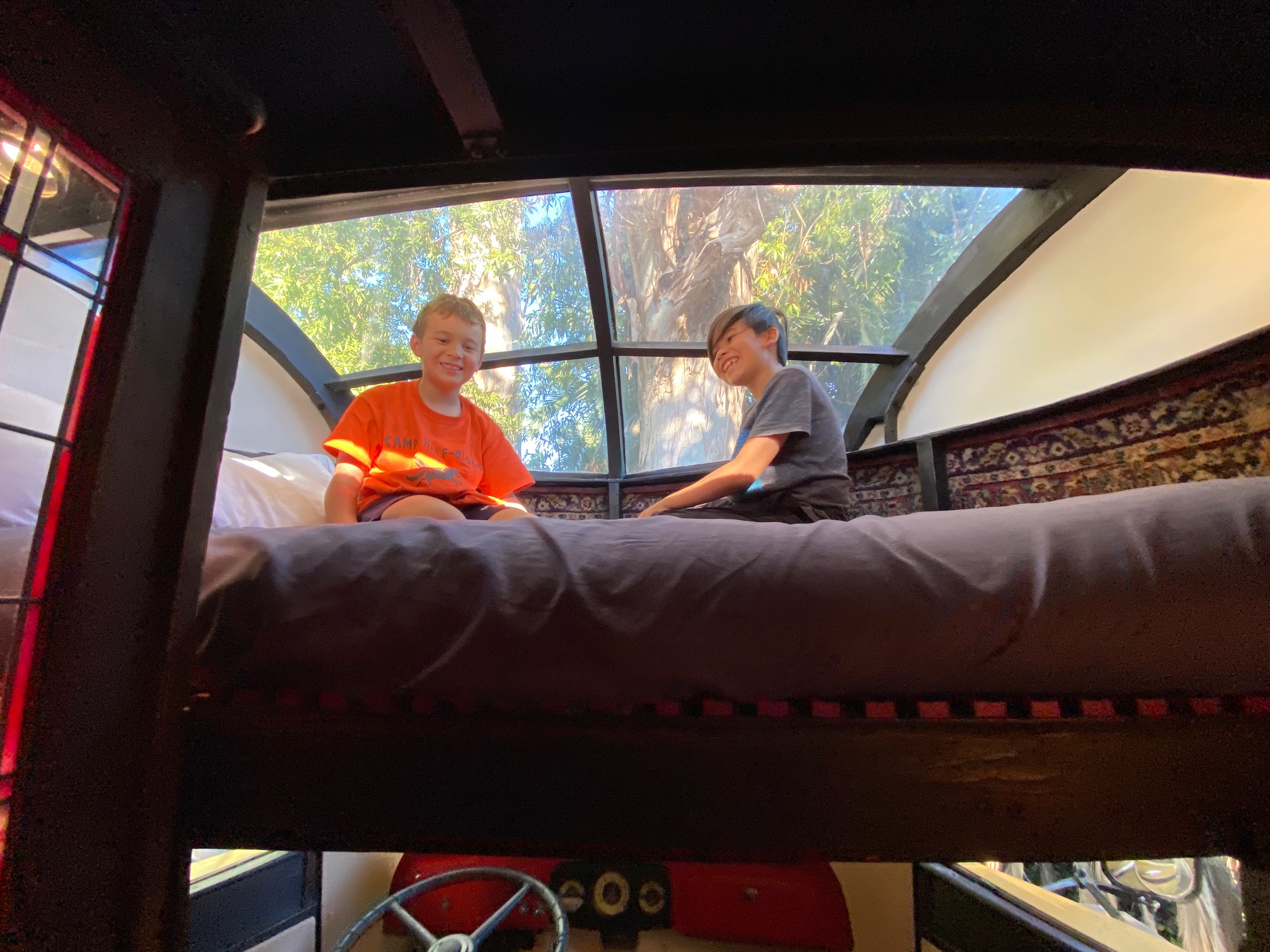
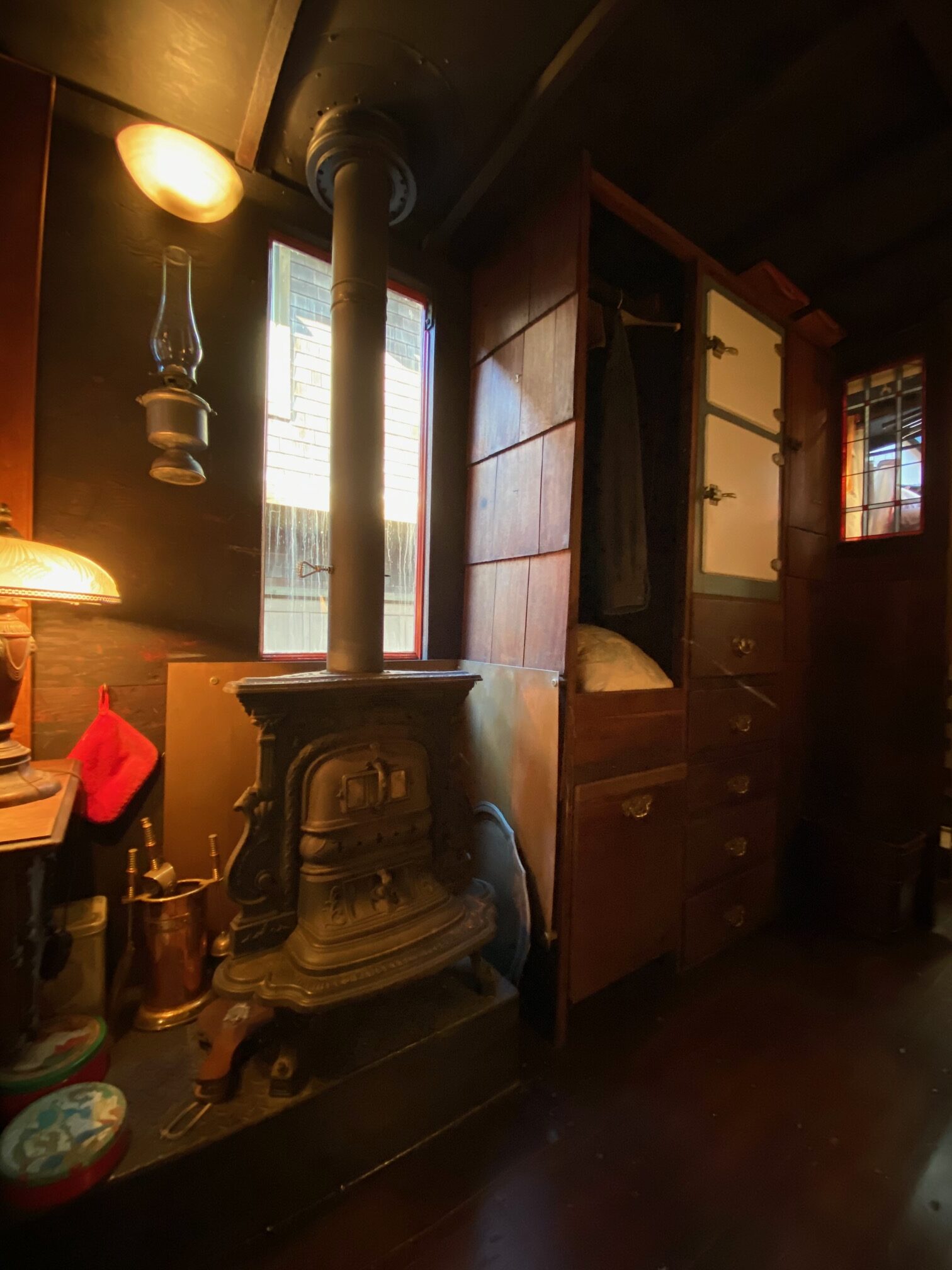
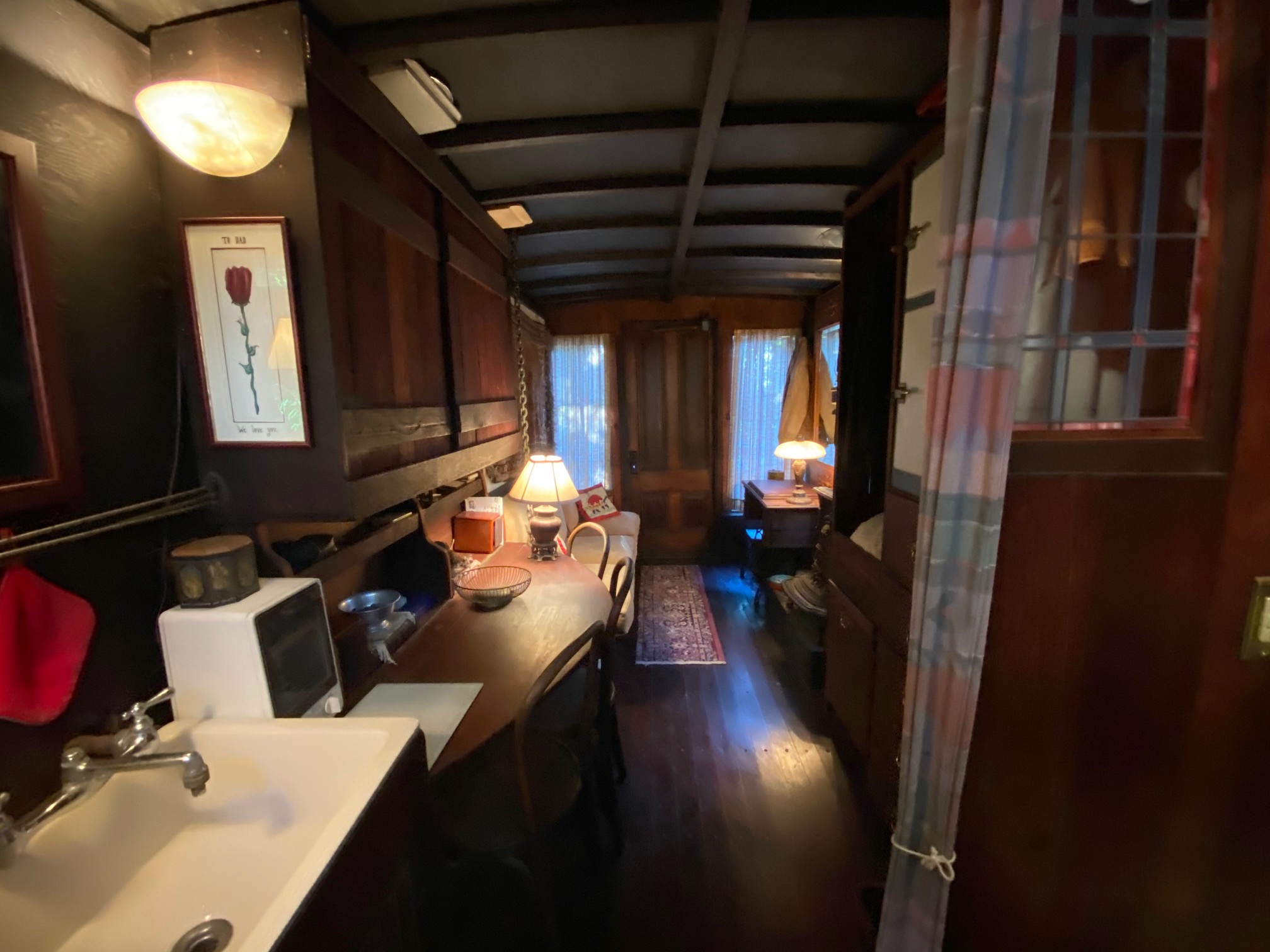
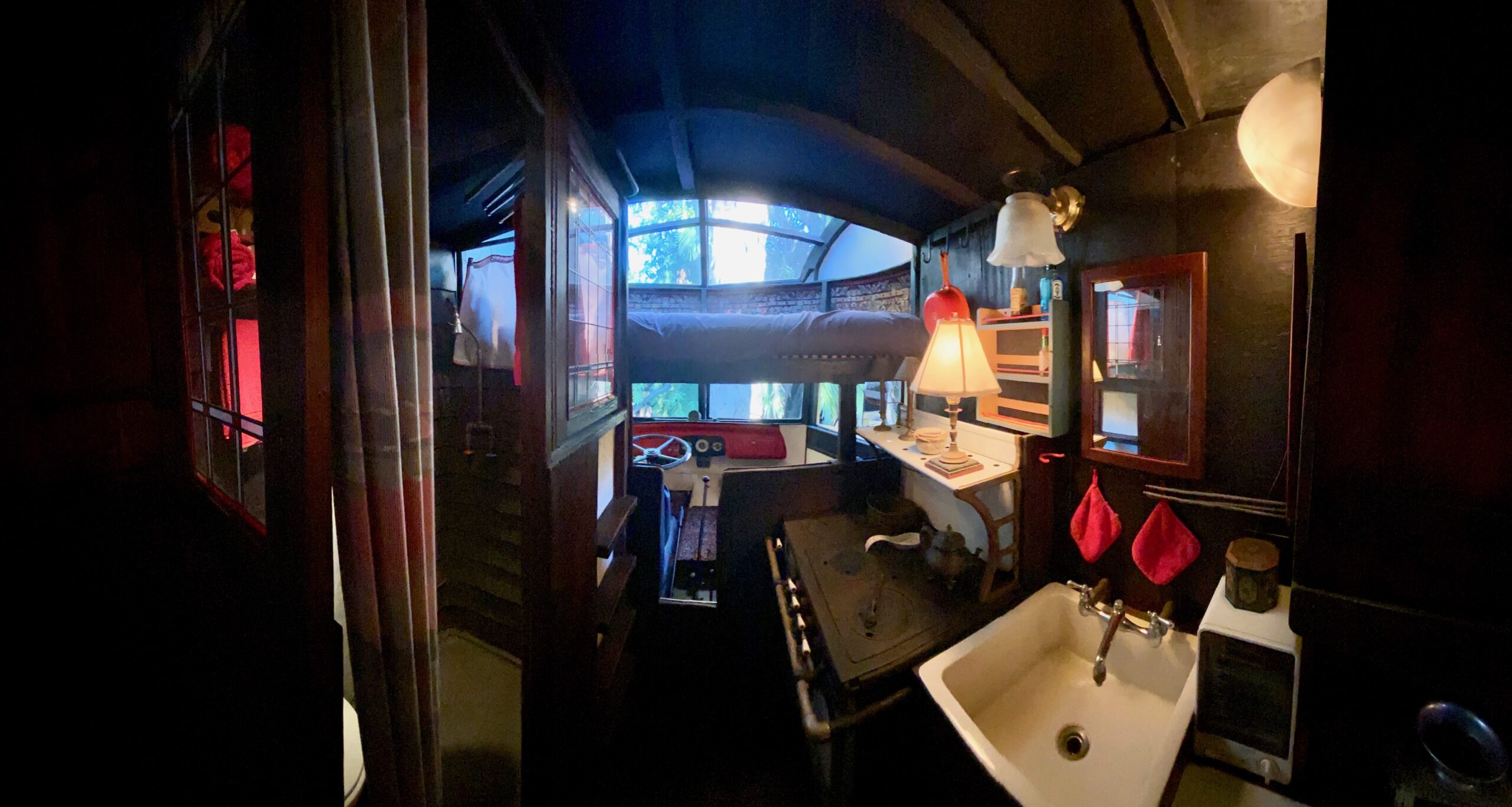
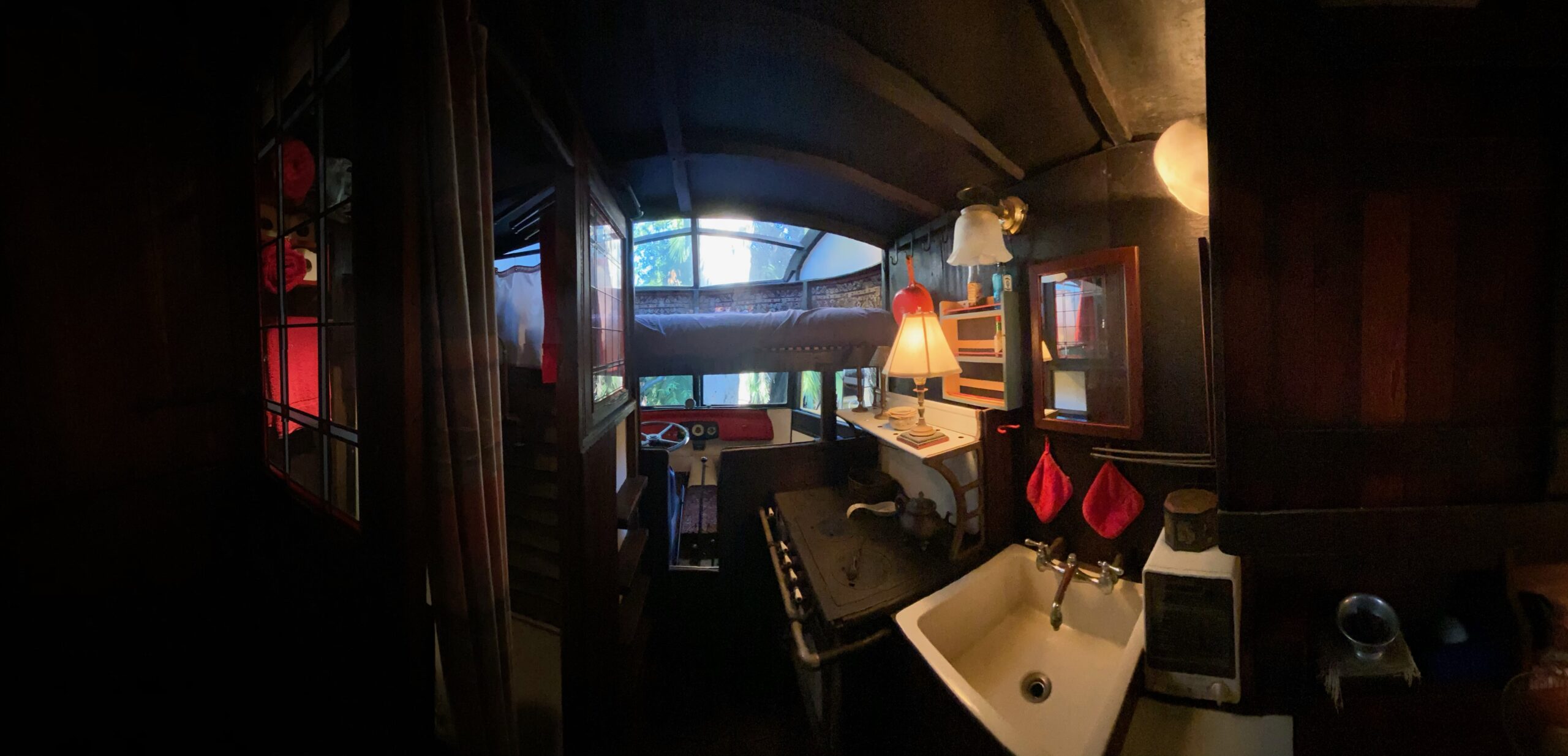
HISTORY OF BIG TRUCK THE 1937 GMC INTERCITY MOVING VAN / MOTORHOME CREATED BY WALLY COX
A Personal History by Owner Walter Cox
The F 16 HD GMC intercity moving van (General Motors Chassis Truck No. 952, California ID #N253432CAL) was purchased new in 1938 from an Oakland GMC dealership (Lehmer’s) by newly married John Holcomb, then residing in Berkeley, California with his wife and infant son. Holcomb founded a furniture store and
moving business called “Johnny’s Furniture and Moving,” located on the west side of the 2000 block of San Pablo Avenue in Berkeley, California.
Although many of the adjoining buildings have since been torn down for redevelopment, the original brick-columned façade of Johnny’s Furniture and Moving still exists, currently occupied by multiple trendy restaurants and shops, including a Spanish tapas bar called La Marcha.
The newly acquired moving van was used to deliver new furniture, as well as to transport furniture for on-site refinishing. It was also used for local Bay Area moves of household goods – the GMC’s F 16 HD designation, with a Straight Rating of 13,000 pounds, meant it had a 3-ton payload capacity. With its Eaton 2-speed differential, 4-speed non-synchronized straight-cut transmission, and high-output inline 6-cylinder truck engine (maximum torque @ 1200 rpm), it was geared low enough to easily handle the steepest East Bay and San Francisco hills
when fully loaded. On flat ground it could cruise at 60 miles per hour in fourth gear, high range.
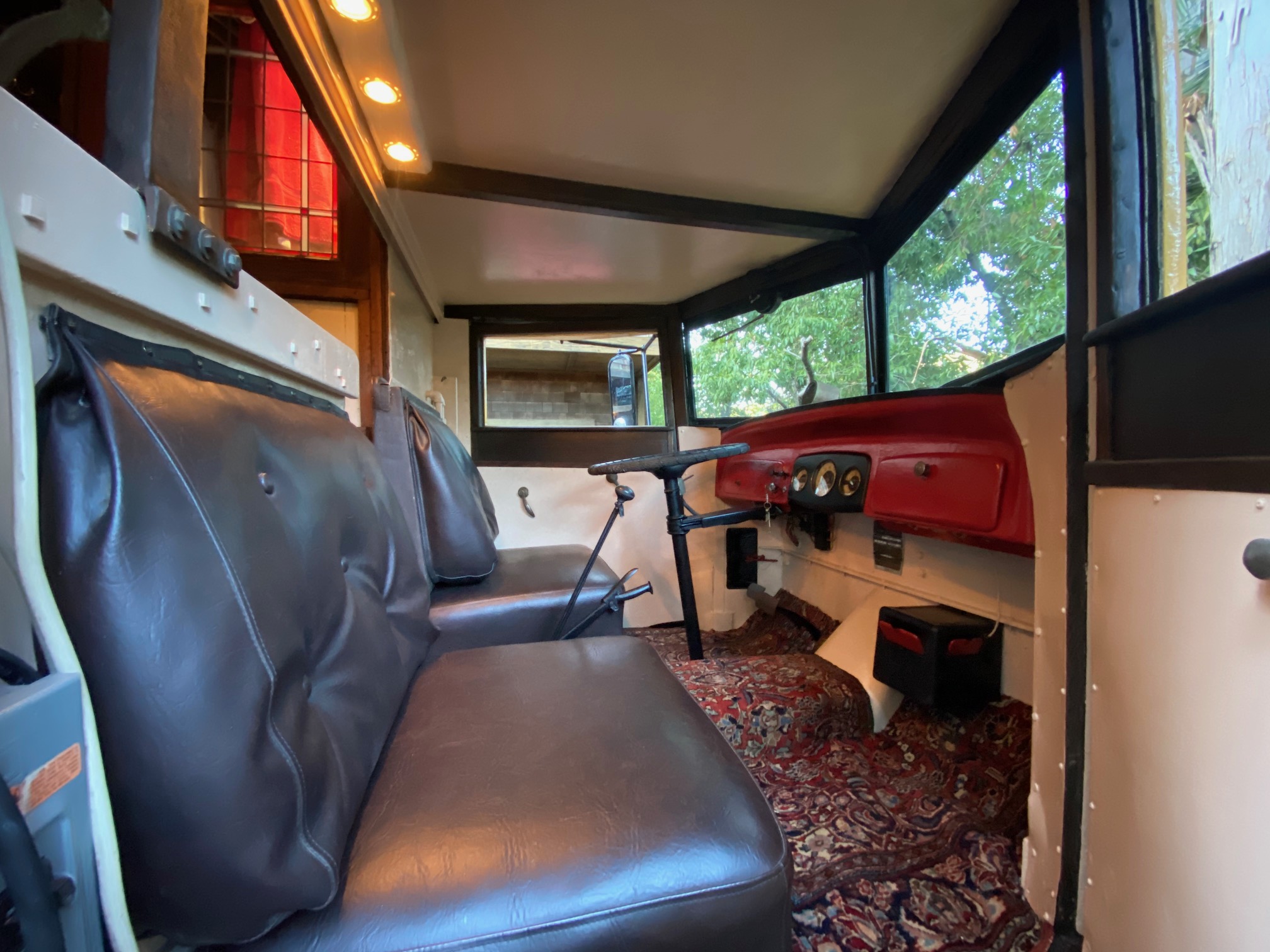
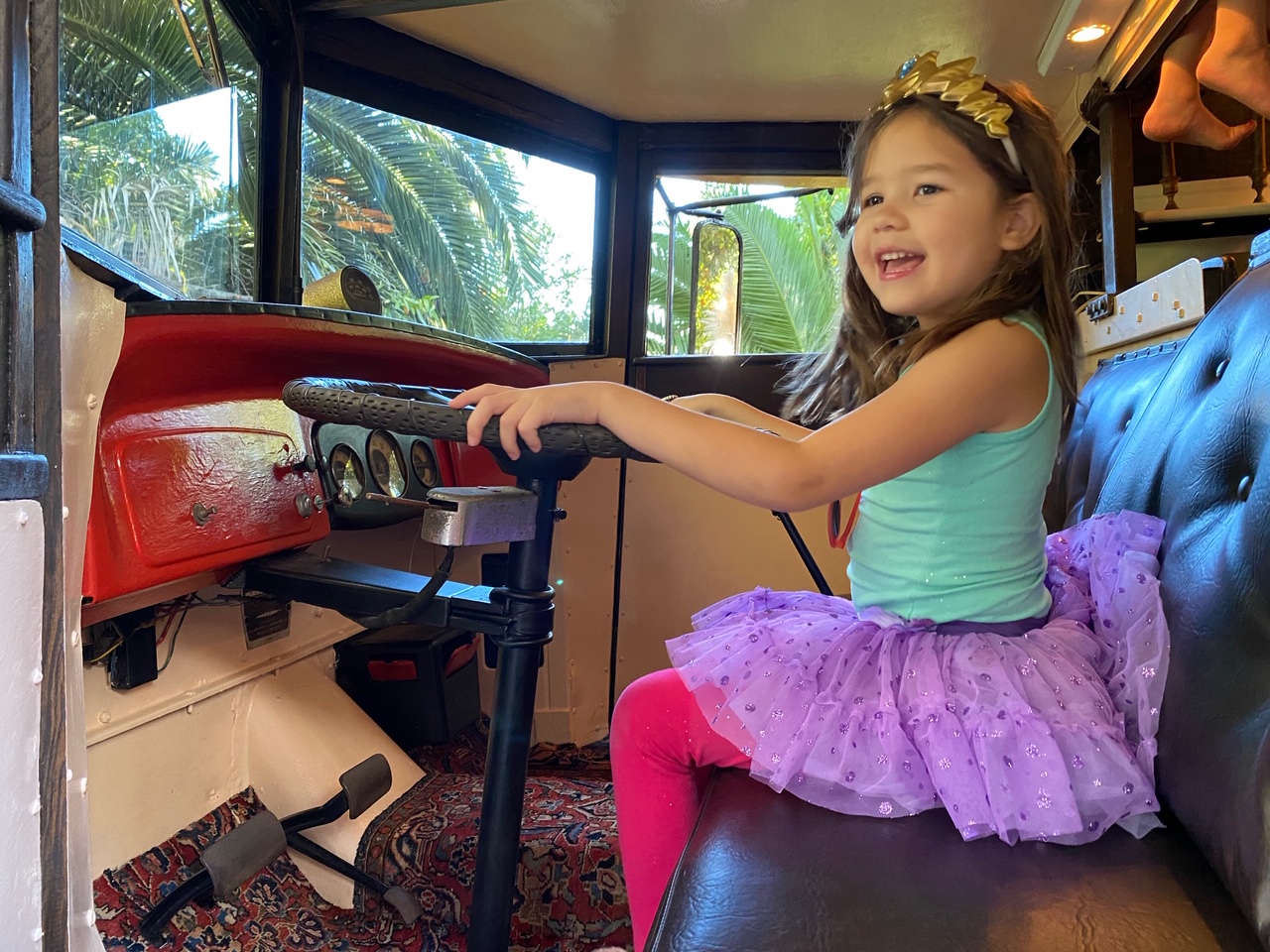
My best information is that 1937 was the last year General Motors Truck built a van body mostly crafted from wood – inside it resembles a ship with arched oak framework for the enclosed rear van and the front doors, with vertical-grained Douglas Fir for the floor, all bolted to a steel chassis. The Art Deco steel hood,
freestanding headlamps and widely flared front fenders date it squarely in the 1930s, before all-steel construction and more unitized design became the norm in the United States truck industry during the 1940s.
The GMC truck was an essential foundation for Johnny’s Furniture and Moving,
which was successful from its 1938 inception. The engine and other drivetrain
components were rebuilt once during the early 1950s after it had clocked about
95,000 miles. In 1961, the truck was retired from service in favor of a more
modern vehicle. However, because it retained sentimental value, it was parked at
the rear of the store in space accessible along a side driveway. The truck retained
its original muted orange paint, with a stylized rendering of the earth custom-
painted on the center of each front door – these door paintings resembled the
“Blue Marble” photos that became common from later U.S. space missions.
While visiting an adjacent property in Fall 1968, I happened to spot the truck’s Art
Deco grille peeking out from overgrown blackberry bushes. My girlfriend Beverly
Katz and I led a somewhat nomadic hippie lifestyle, common in the Bay Area
during the late 1960s, and we were active in the Renaissance Pleasure Faires
hosted in the San Francisco Bay Area and in Los Angeles by Phyllis and Ron
Patterson. Many of the denizen performers and artisans at the Pleasure Faires
lived during the week in hand-crafted gypsy homes built on old truck chassis while
they rehearsed for costumed weekend Elizabethan performances. As an
established hippie (Red Dog Saloon at Virginia City, Ken Kesey’s Merry Pranksters
at La Honda, a Tribute to Dr. Strange, the Trips Festival, inheritor of Beat
consciousness through Neal Cassady and Allen Ginsburg, and early friend of the
Grateful Dead and LSD guru Augustus Owsley Stanley III) I envisioned converting
the 1937 GMC into a traveling residence. John and his son, now partners at
Johnny’s Furniture and Moving, agreed to sell it to me.
After cutting away the blackberry vines, Beverly and I moved into the 16’ x 7’
space at the rear of the truck. We found the roof sound and the original
framework remarkably intact, so we began restoration; Johnny’s Furniture and
Moving provided power and restroom facilities. The first task was to raise the
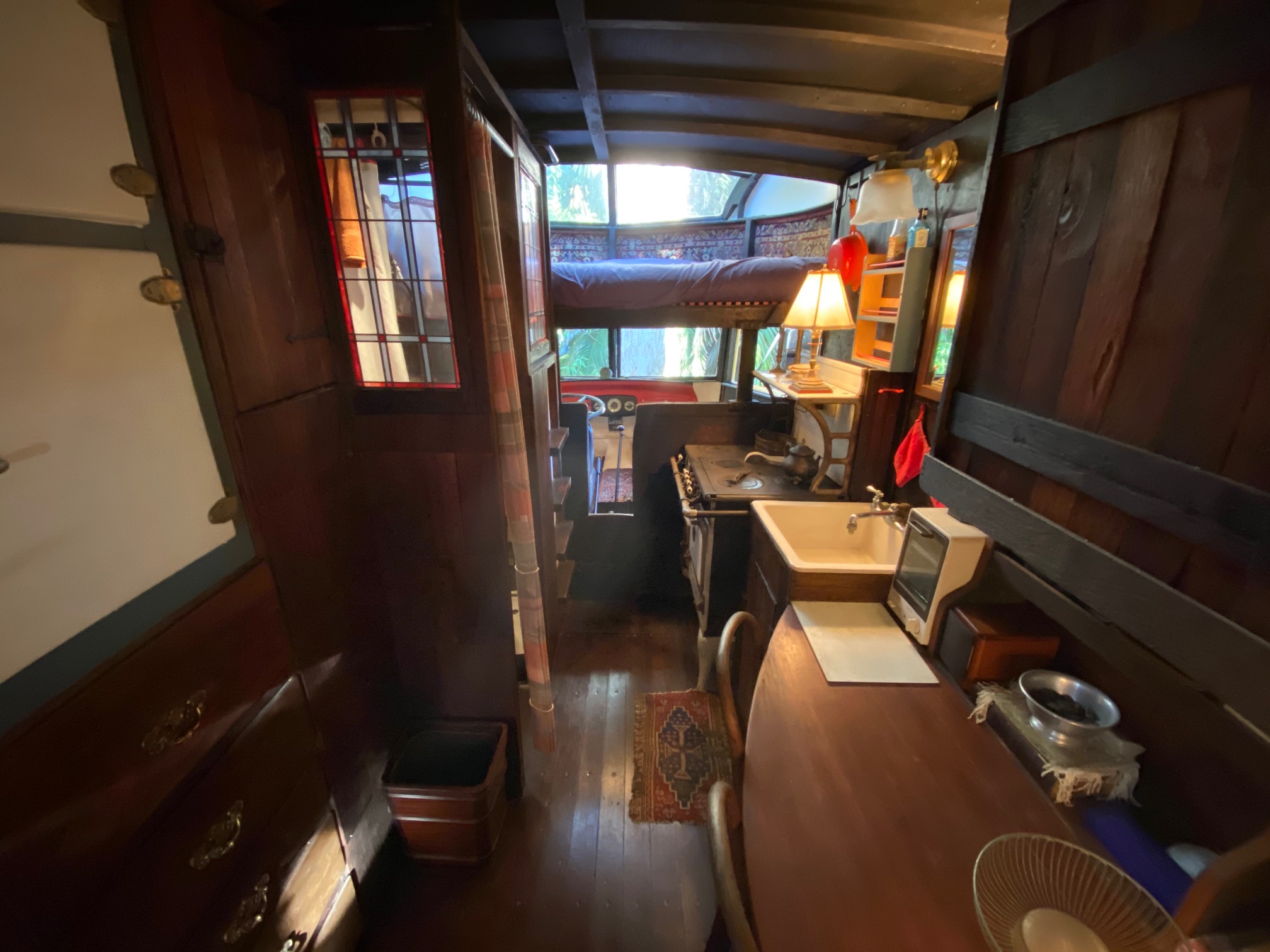
overhead cab framework 18” to accommodate a sleeping loft, then work
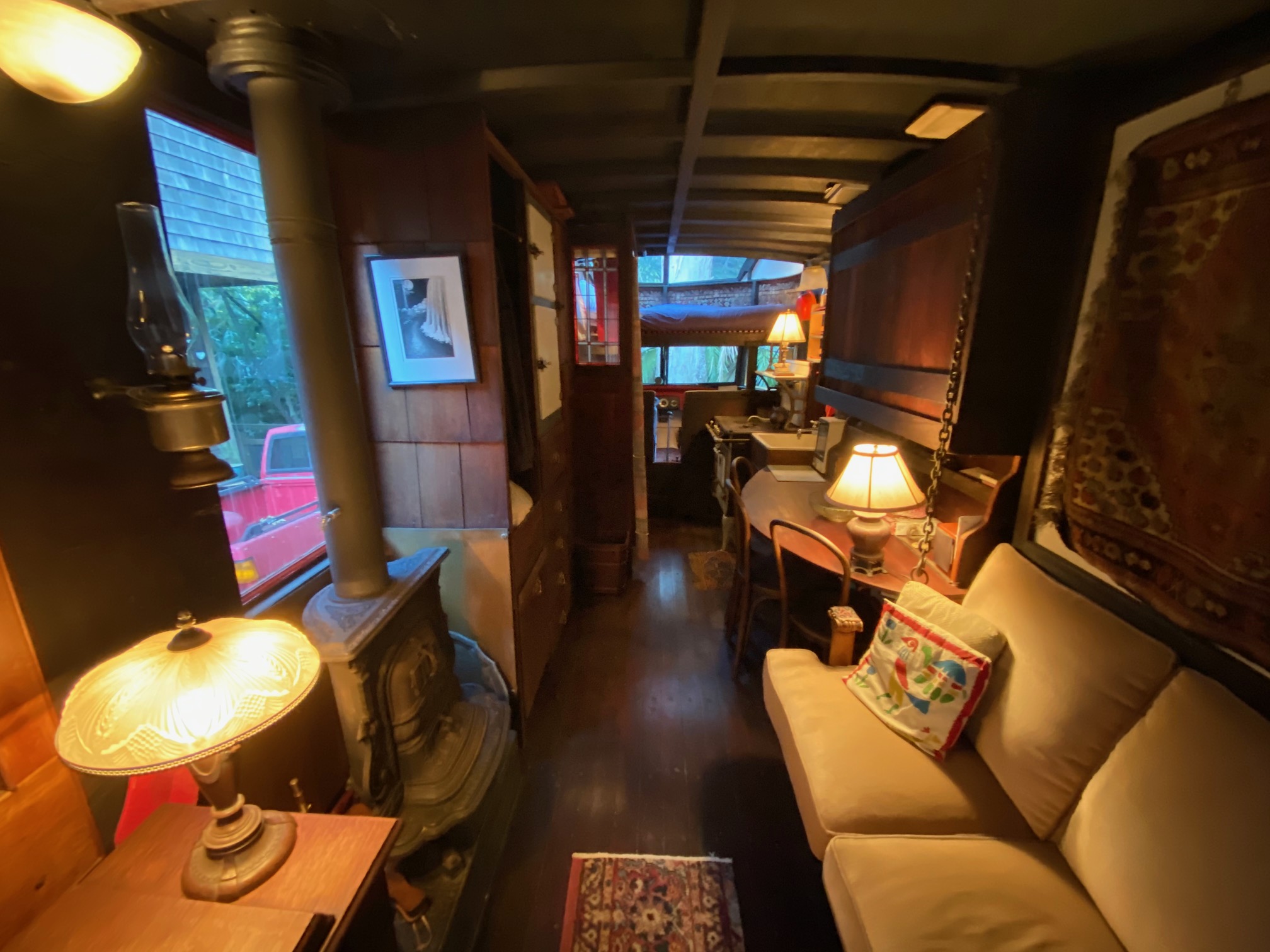
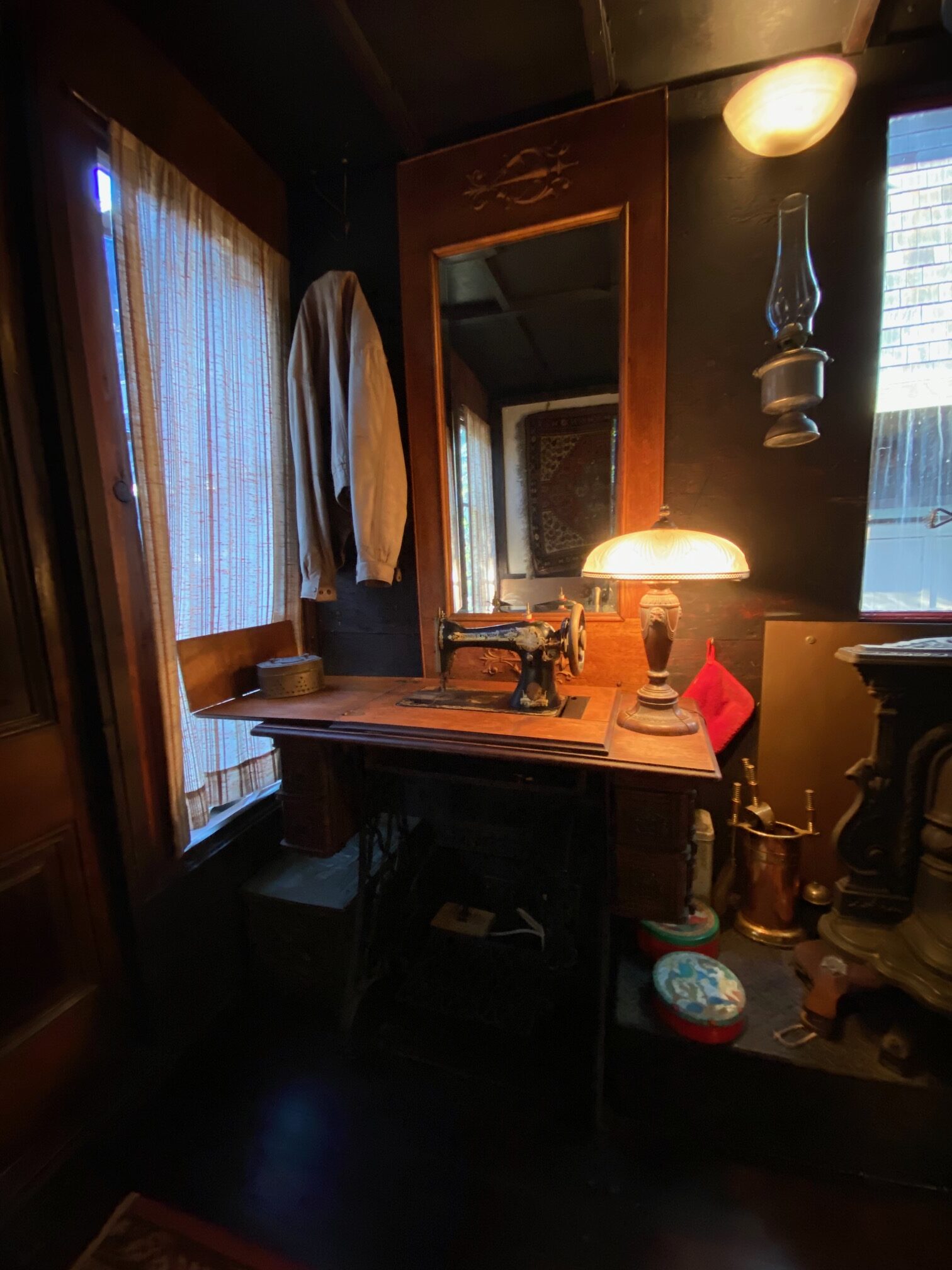
proceeded on interior accommodations. Many of the furnishings and appliances
that are now part of the truck were already stored in the bed – the antique 19 th
century gas cookstove, the semi-circular wood table, the Bentwood chairs, the
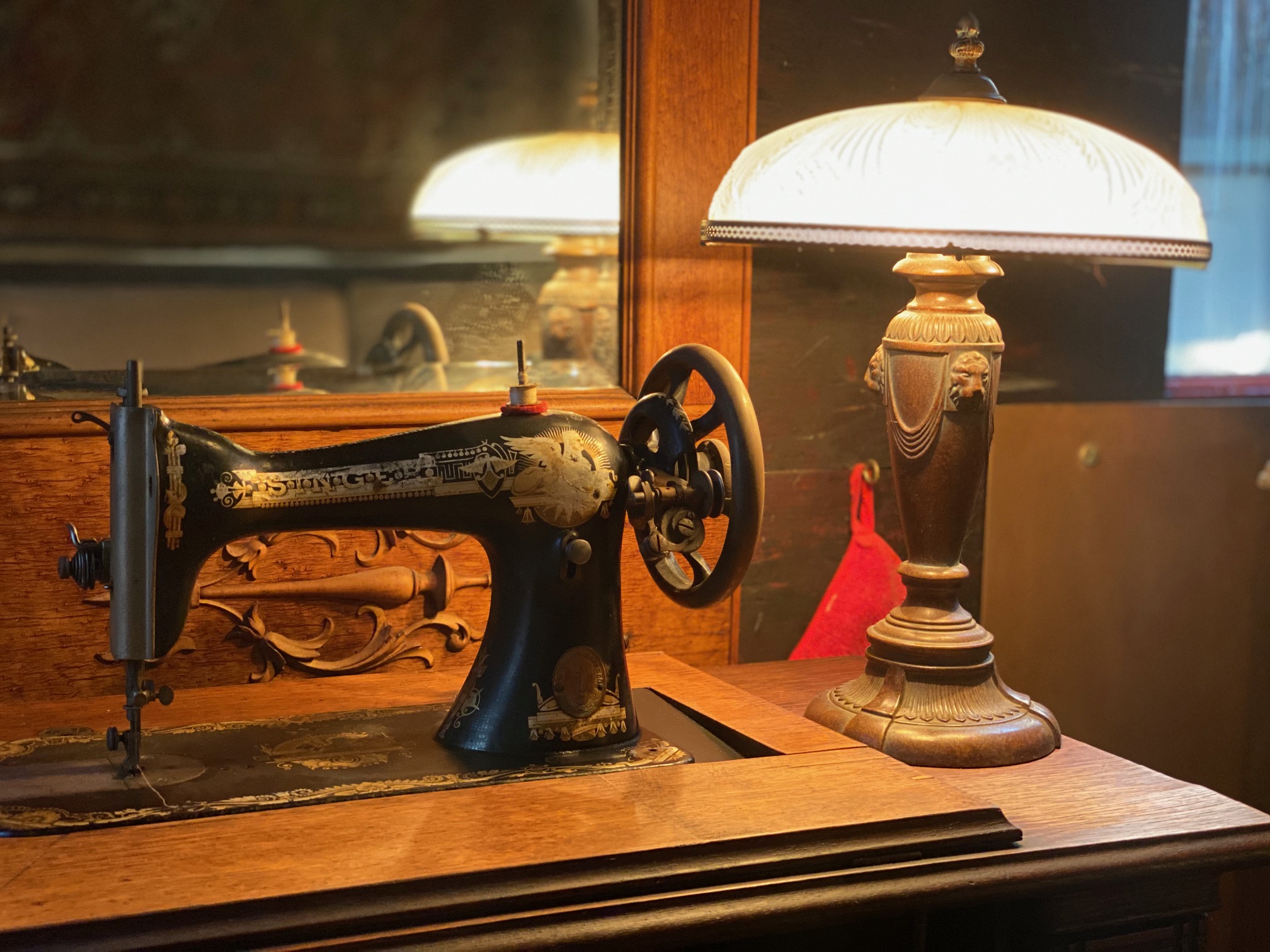
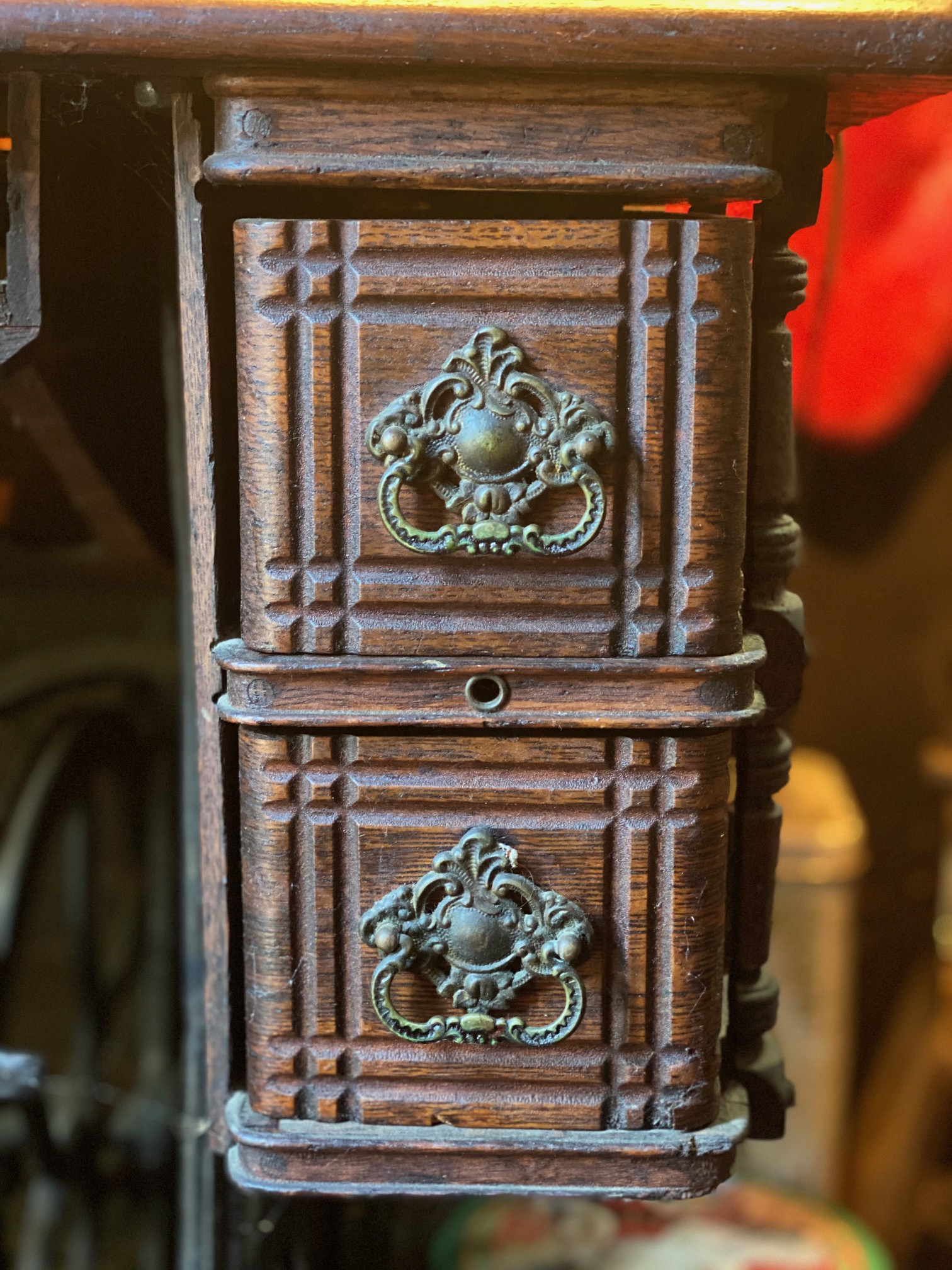
1890 Singer treadle sewing machine (Beverly was a seamstress and used the
Singer for costuming projects, as well as for sewing curtains and upholstery
covers), and residential hinged glass windows used to complete the rear entrance.
A coal-fired parlor stove, appropriately scaled, provided welcome heat as winter
rains set in.
Soon it was time to move the truck to a new location for several months of
rebuilding and restoration. This was a challenge since it had been stationary for
so long; the engine had not been turned over or started during the previous seven
years. I replaced the battery, put water in the radiator and fuel in the tank – with
no further encouragement, the engine turned over and started within a few
seconds, running flawlessly in a sign of ready willingness to hit the road.
One early December morning, when traffic was light, I drove the still unregistered
truck from San Pablo Avenue to a fenced Berkeley workspace located at 5 th and
Delaware Streets, about ten blocks away. This workspace, a residential artist
community called “The Boneyard,” became home during the next several months
Minimal toilet and washing facilities were available, with an adjacent shed that
included workbenches, welding equipment, and electrical power. Full-time
residents included caretaker Mitch who lived in a one room cabin heated by pot-
bellied stove, a George and Sarah who were in the final stages of building a
trimaran boat (they eventually set forth on worldwide voyages), and a Berkeley
Repertory Theatre carpenter, Alan Blanchard, who occupied a hand-crafted bus
with his wife Sheila. Adjacent businesses included an automotive workshop, an
asphalt paving company, and a cabinet shop; these businesses offered part-time
employment when funds became low. A full host of counterculture characters
lived nearby, including musicians, artists and actors comprising Berkeley’s famed
Floating Lotus Magic Opera Company, a traveling theater group conceived by
local playwright Daniel Moore. Today this neighborhood has been developed as
an upscale West Berkeley restaurant and shopping destination.
Beverly and I parted ways, after which many people participated in completing
the truck. Especially helpful with aesthetic choices were Alan Finn, Meredith
Smith and Connie Henderson; everyone helped scavenge period pieces from
nearby abandoned houses – the pine and redwood paneled rear door is from one
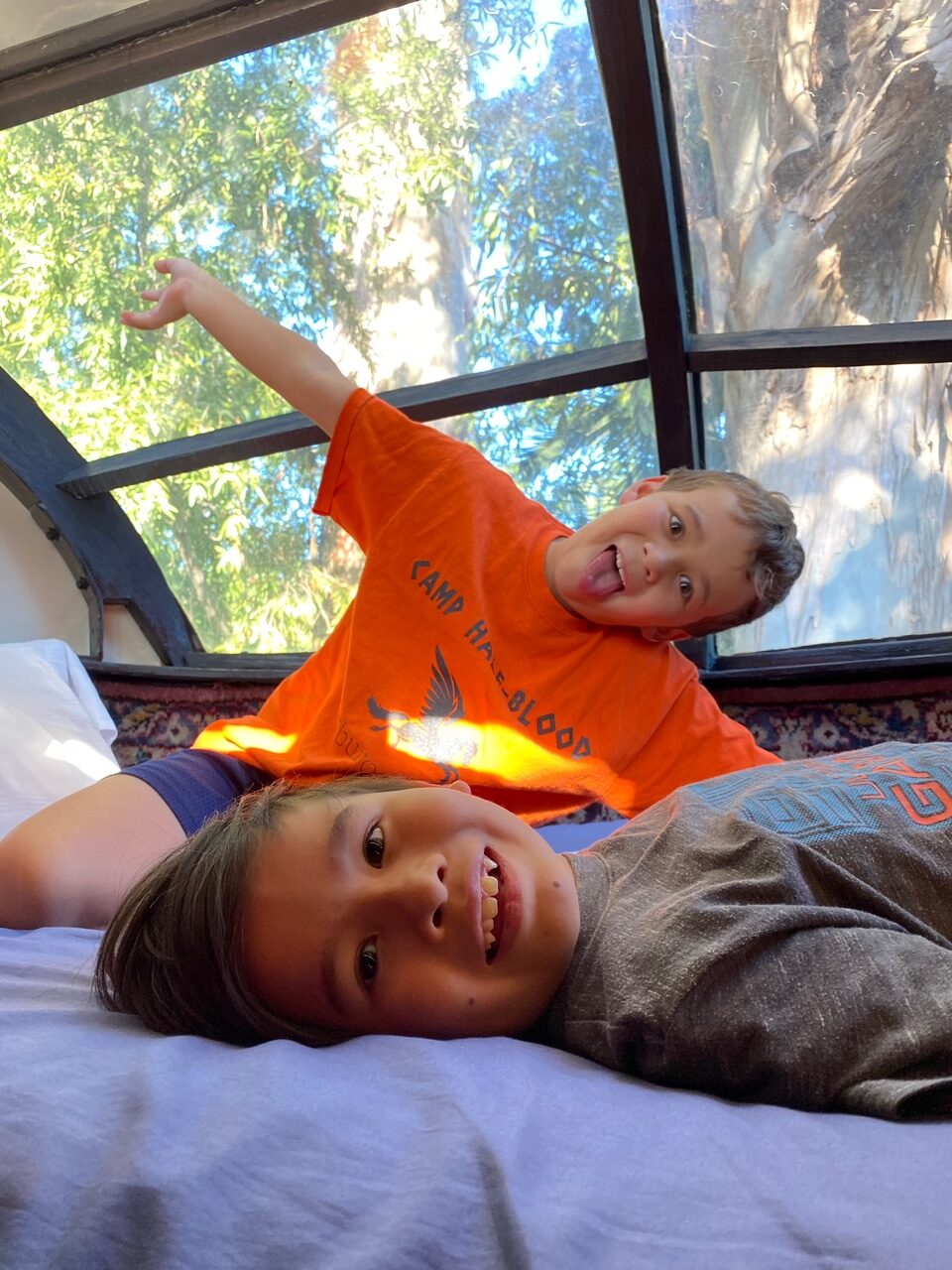
of the earliest Berkeley houses. The dome was completed above the sleeping loft,
all braking and mechanical components were made ready, some new tires were
secured, and a water system with a toilet and shower were installed. The truck
was complete for summertime adventures.
In Berkeley the Spring of 1969 ushered in the creation of People’s Park. On
Sunday April 20 th , the truck was driven to the park location, where food was
served from the rear porch to about 150 hungry workers as landscape architect
Jon Read, a occasional employer, headed up park design and construction efforts.
It was a happy day as we began to transform a muddy, abandoned South Campus
lot into a place of beauty to the sounds of “Joy of Cooking,” a local band that I
asked to attend through friends and bandmembers Terry and David Garthwaite.
The park was born, and over the next several weeks thousands of Berkeley
residents joined in to complete the grading and install plantings; the park builders
were universally acclaimed by merchants, students, and University of California
administrators.
All that changed three weeks later on May 15, 1969 – “Bloody Thursday.” Newly
elected Governor Ronald Reagan chose to make an example of People’s Park,
taking a stand against U.C. Berkeley’s “communist sympathizers, protesters and
sex deviants.” Beginning at 4:30 am, the extensive trees, shrubs, flowers and
grass that had been installed by thousands of Berkeley volunteers were
destroyed by law enforcement. By early morning an 8’ cyclone perimeter fence
had been erected to prevent future misappropriation of University property, the
newly bare ground guarded by the California Highway Patrol and University of
California police. When U.C. students realized their park had been destroyed,
they arrived in protest. A police riot ensued, and Alameda County Sheriff’s
deputies were called in; they fired live rounds of buckshot into the crowds as
people tried to run away, wounding hundreds. Student James Rector was
murdered by one Alameda County Sheriff’s deputy, and my Boneyard neighbor,
Berkeley Repertory Theater carpenter Alan Blanchard, was permanently blinded.
Though I did not participate in the civil unrest that began on May 15 th , after
Governor Reagan sent the National Guard to occupy Berkeley, I made a point of
driving the truck at all hours of the day and night around Berkeley’s empty
streets to protest Reagan’s declaration of martial law. I was surprised that law
enforcement never pulled me over or questioned my violation of the state-
imposed curfew.
In June 1969, we made our inaugural voyage across the Bay Bridge to San
Francisco, north across the Golden Gate Bridge to Marin County, then along
Highway 1, climbing two-thousand feet to a natural amphitheater near the top of
Mount Tamalpais. This love-in and musical event was attended by thousands of
people to commemorate the original “Fantasy Fair and Magic Mountain Music
Festival” held two years earlier in June 1967. This original love- in and concert
predated the 1967 Monterey International Pop Festival by a week, kicking off San
Francisco’s “Summer of Love.” The truck performed perfectly on its first run,
and three of us (myself, Alan Finn and Connie Henderson) were ready to embark
on summertime adventures, traveling north through rural California to Mount
Shasta, Mount Lassen, tracing the Oregon coastline, and finally arriving in Seattle,
Washington for a lengthy stay near the University of Washington campus.
One of our first stops was to visit Mary Maier, elderly proprietress of the Mount
Shasta Inn located in Mount Shasta, California. Mother Mary, as she was
universally called, had been visited by the Beatles during one of their California
stays and she would live only a few more months, passing away in January 1970.
Though obviously frail, she agreed to sit with us in the hotel dining room and tell
her life-changing story about being rescued by “The Brothers on the Mountain”
more than fifty years earlier, when as a teenager she lost her way during a
blizzard on the slopes of Mount Shasta. She encouraged us to ask The Brothers
for assistance whenever we found ourselves in need. She assured us they would
always provide if we learned “to have faith and let it be” – advice we took to
heart and soon found essential.
In March, 1970 Paul McCartney released his all-time hit single “Let it Be,”
referencing Mother Mary and her “words of wisdom.” Though Paul has written
he was referencing only his mother, who also was named Mary, we couldn’t help
but make the connection to our visit with Mother Mary at the Mount Shasta Inn.
What we learned from her was invaluable, both as literal travelers and travelers in
life.
The truck would occasionally break down, requiring mechanical attention (it was,
after all, already 32 years old), yet we came to look forward to such interludes
because they always led to our encountering remarkable people and experiencing
transcendent adventures. When a transmission bearing failed on a steep
Northern California highway, with painful grinding and clashing, we were
immediately directed to a single-lane country road. At the bottom of a long hill
we found a country store, where we parked above a concrete mechanics pit ideal
for working on large vehicles. We arrived unannounced, yet store owner Paulo
met us warmly. His first words were “Welcome! Please feel free to stay…for a
day, a month or a lifetime.”
And so it went; this sort of thing became a daily occurrence. It is fair to say that
our many adventures during the months traveling north to Seattle, Washington
then back along the California coast through Mendocino, California permanently
changed all three of us. We had come to regard the truck – and life itself,
provided one maintained the right attitude – as magical. In November 1969, we
arrived back in Berkeley very different people than when we left.
During the next several months, traveling both alone and with others, similar
changes and revelations became the norm for truck travelers. Beginning in
November, I deepened my friendship with playwright Daniel Moore and provided
transportation for the Floating Lotus Magic Opera Company to performances of
“Apocalypse Bliss” at Berkeley’s hillside John Hinkel amphitheater as well as
Floating Lotus trips to land provided by one of Daniel’s wealthy benefactors,
thousands of acres of coastal virgin redwoods, where we made music and
practiced new productions. These were special times, with as many as 20
musicians, dancers and artists hanging out of every window in a traveling
performance unique to the late 1960s.
In January, 1970 my paternal grandmother, with whom I enjoyed a special bond,
died. I began to feel that I had learned all I could as a traveling gypsy. It was time
to pass the truck along, and I decided to embark on a new personal adventure,
common given the zeitgeist of the era; I needed to find my spiritual teacher. In
this effort I was inspired by a book called “Secret of the Andes.” I prepared to say
goodbye to family and friends and travel to Peru to live with the Quechua
Indians in the remote Andes mountains.
I traveled south to attend a final “Renaissance Pleasure Faire,” which led to a
short career hand-knotting custom macramé halters for wealthy actresses – not
quite Elizabethan, but good fun since the hand-knotting was performed live on
bare-breasted clients in a private booth. Faire creator Phyllis Patterson
approached me when she heard the truck might be for sale, however it didn’t
seem quite right, as she intended to park it in the driveway beside her home as a
playhouse for her teenage daughter.
I drove north to Marin County during Summer 1970, determined to find an
appropriate new owner for the truck. Parked one day on Sir Francis Drake Blvd.
in San Anselmo, there was a knock on the door. I had placed a rather cryptic sign
on the back porch that read “Seeks a New Master,” which prompted a question,
“Are you selling your truck?”
It was a bit more complex than that, as I was particular about who should be the
truck’s new “master.” The lady who knocked on my back door was Sue Stamas,
so we arranged a time when she, her husband John, and I could sit down to talk. I
learned that John Stamas was a loan officer at a local bank, a job he was weary of.
They lived in an idyllic home in leafy Woodacre, a few miles to the west, where
they were raising their four children – Yianni (9), Eugenia (7), Mark (5) and Chloe
(3). However, they hungered for more than semi-rural charm and comfort could
offer. They wanted an escape and felt the truck could provide it.
We agreed on a price, and John and I worked to make a few improvements before
they departed. The truck has always been configured to sleep 6, so there was
sufficient room, however I suspected after many thousands of high-speed
freeway miles and extreme service in the mountains that the engine needed a
valve job; we decided to pull the engine and send it out for a full rebuild, including
Stellite exhaust valves that would be more durable than the originals. We also
installed an instant-on water heater and upgraded the brakes with a dual master
cylinder.
The Stamas’ put their house on the market, however it failed to sell immediately –
in 1970 it was deemed “overpriced” at $28,000 , though its current value is
$800,000 plus. They were anxious to begin their new life – John had already
burned his “banker shoes” in the living room fireplace – so they rented out the
home and departed in late 1970 to visit relatives near Albuquerque, New Mexico.
During the next year, they lived in close proximity with Native Americans on the
Acoma Pueblo, for millennia continuous inhabitants of present-day New Mexico.
Local tribes people offered the truck a new name, “Big Truck,” which replaced its
previous moniker, “Leviathan.”
Between 1972 and 1974, the Stamas’ decided to pursue graduate degrees at
Amherst College. They drove “Big Truck” east to Amherst, Massachusetts and
rented a farmhouse in nearby Deerfield. All four children enrolled in The
Common School in Amherst, and the truck was parked nearby as a meeting place
for the children after school. John and Sue joined them once graduate seminars
concluded, and the family returned together to their Deerfield farmhouse each
evening.
Their graduate studies complete, the Stamas’ decided to move to Halcyon,
California. They needed to transport household goods to their new residence, so
John had a custom tow bar made to transport the truck cross country behind a U-
Haul van. During the next ten years, the truck stayed at a variety of RV storage
facilities in Los Angeles and the San Francisco Bay Area.
In 1985, John wrote to me: “The 1937 GMC is yours and always has been,
Walter.” At the time we owned a piece of country property, 6 acres in Nicasio CA,
so I agreed to repurchase the truck and John arrived with it in tow. For the next
few years, we parked it in a clearing surrounded by redwood trees, where it
served as an occasional guest house.
In 1988-89, during a brief stay near Chicago, Illinois, I again used John’s custom
tow bar to move the truck cross-country – a round trip voyage of 4,300 miles.
We stayed in an intentional community called Stelle, and there the truck served
as a meeting place for those interested in Robert Bly’s mythopoetic men’s
movement.
In 1996, I was nearing completion of a client’s large custom home and realized I
needed a break from contracting. After posting a note and a photo of the truck
on the Nicasio Post Office bulletin board, Walter Stevens called to offer a clearing
on his 40-acre land near Forest Knolls, where the truck could serve as my writer’s
retreat during the following year. Walter Stevens said he knew from the note
and the photo that the truck and its owner would be welcome; we met for the
first time the day I drove the truck to his property. Though I intended to stay in
semi-retirement to write for only a year, the Forest Knolls retreat stretched to
more than six years – a happy time surrounded by the silence of the forest.
The truck followed my move to San Rafael in 2002, where it has continued to
serve as a retreat and guest house. Full restoration began during Summer 2019
and is now complete, with a new roof, a new teak-trimmed polycarbonate dome,
and all exterior and interior aspects refinished and restored. The engine starts
and runs quite well, and the drivetrain components (clutch, transmission,
driveshaft, differential, chassis and brakes) function as designed. The truck is
mechanically sound for local moves at speeds up to 45 miles per hour, and the
custom tow bar enables longer moves at freeway speeds.
Though obviously unique as a custom motorhome/guest house, to the best of my
knowledge this is also the last surviving example of a GMC F 16H D wood-framed
intercity moving van. Extensive searches over a period of years reveal no other
examples.
Walter Cox, November 9, 2019